
Keep the first encounter positive
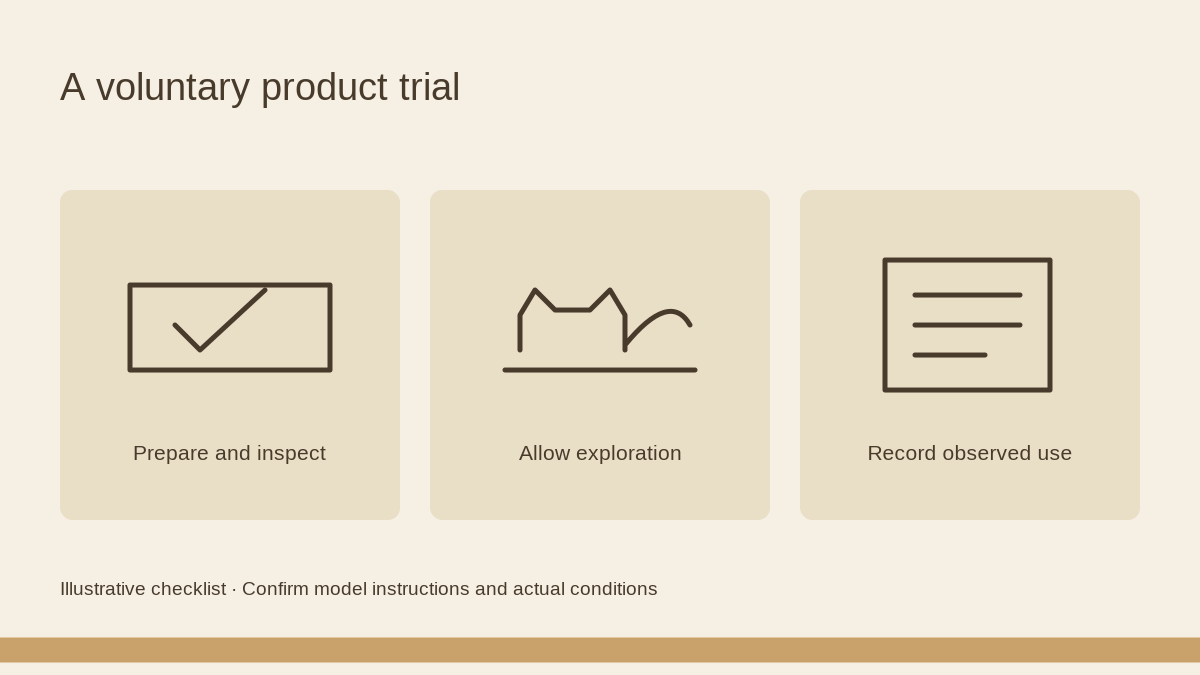
AAHA/AAFP guidance favours gradual, positive introduction to new experiences and allowing kittens to approach voluntarily. Apply that principle to a product trial: set it up correctly, allow exploration and avoid forcing the cat’s paws onto the surface.
Prepare the product before the trial
Remove transport packaging and check the assembly against the instructions. Inspect accessible edges and fixings. Position the item securely on the intended surface. Photograph the setup without the animal first, so any later movement or assembly difference can be identified.
Record use without creating a promise
Note voluntary approaches, scratching, resting and avoidance separately. Record the duration and conditions of observation. One cat using a sample once is useful feedback, but it is not evidence for claims such as guaranteed acceptance, anxiety relief or suitability for every household.
Handle a lack of interest constructively
Recheck orientation, placement and the physical setup before changing several variables. For retailer support, request a photo of the installed item and the model reference. If the owner reports discomfort or a marked behavioural change, product troubleshooting should give way to professional veterinary advice.
Make trial feedback useful for after-sales support
Keep a setup photograph, the model code and a short record of voluntary interaction. Record approach, sniffing, scratching and resting separately, with the observation conditions. If the product moves, pause the trial and verify assembly and the intended floor surface. For a refill system, confirm that the insert sits as instructed before the cat approaches it. A support request should describe the problem without attributing a clinical cause. Product teams can then answer questions about dimensions and setup while leaving health and marked behavioural changes to veterinary professionals.
A checklist to save and compare
Trial stage | Check | Record |
|---|---|---|
Before access | Remove packaging; inspect edges and assembly | Model and setup photograph |
Voluntary exploration | Allow approach without forcing paws | Approach, sniffing, scratching or avoidance |
Recheck | Movement, position and available scratching face | Only the conditions actually changed |
Compare current model specifications
FAQ
Should I put the cat’s paws on the new surface?
Allow voluntary exploration. Forcing the paws is not part of the positive introduction method described here.
How many days guarantees acceptance?
This guide establishes no success deadline. Record the circumstances and recheck the setup; do not convert a trial period into a guarantee.
What should I send for product support?
The model code, installed dimensions if relevant, a setup photograph and a factual description of movement or assembly concerns.