
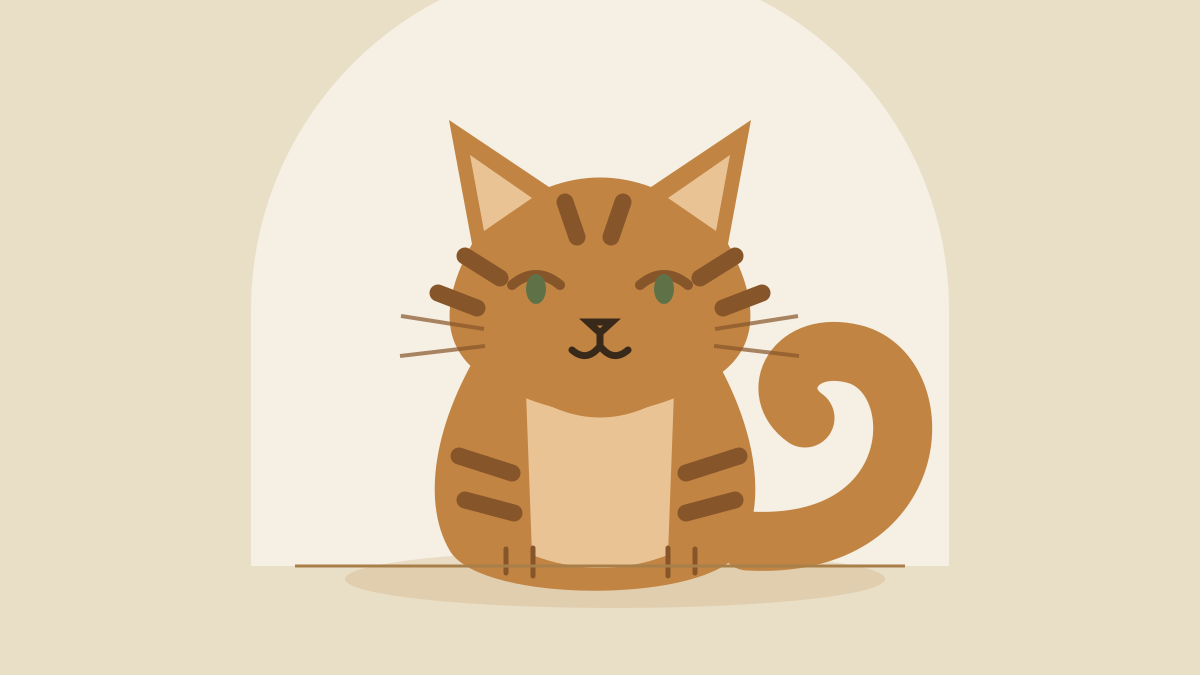
Orange Tabby
- Profile type
- Coat profile
- Coat
- Short or long coats
- Size
- Varies by individual
- Temperament
- Varies by individual
- Origin / distribution
- Found in domestic cats worldwide
- Weight
- Assess frame and body condition
- Lifespan
- Depends on genetics, health and care
Care focusTrack condition, food and activity; groom for the actual coat
Is an orange tabby a breed?
Orange, ginger and marmalade describe coat colour; tabby describes a pattern. These labels do not establish pedigree, country of origin or a standard adult size. Orange can occur in cats with different ancestry and coat lengths. Start a profile with the individual cat’s age, history, health records and actual coat, rather than assigning a universal weight or lifespan to a colour. Our atlas therefore lists orange cats as a coat profile alongside separately labelled breed profiles.
Why are more orange cats male?
Research published in 2025 linked orange colour to a deletion in the X-linked ARHGAP36 region. Under the usual XX/XY inheritance pattern, a male can express orange from his single X; a female usually needs orange-associated variants on both X chromosomes to be fully orange. Females with one copy may show tortoiseshell or calico colouring. Female orange cats exist. A population estimate is not a fixed probability for every mating, and coat colour does not replace checking an individual cat’s sex.
Does an orange coat mean a cat will be overweight?
The familiar fat-orange-cat stereotype is not a diagnostic rule. Colour research does not establish an MC4R explanation for universal appetite or obesity in ginger cats. Cornell lists obesity, age and inactivity among feline diabetes risk factors. Record body condition and weight trends instead of treating a round silhouette as a target. A large frame and excess body fat also need to be distinguished. Ask a veterinarian about the individual cat when a trend raises concern.
Temperament, shedding and vocal behaviour
A friendly-cat story is enjoyable, but it is not a measured personality score for all cats of the same colour. Note whether the cat approaches voluntarily, rests comfortably near people, responds to toys or withdraws from contact. Use observations over time and the current carer’s account. Grooming needs should follow the actual coat and its condition. Do not force handling to test a friendliness label, and provide a way to leave an interaction.
A practical care record
Record weighing dates, meals, treats, appetite and activity in one place. Use food appropriate to the cat’s life stage and discuss body condition with a veterinarian. An orange coat alone is not a reason for a prescription diet, a fixed post-neutering food reduction or a crash diet. Offer voluntary play, a quiet resting place and accessible scratching opportunities. A repeatable record makes changes easier to explain than an impression that the cat always seems hungry.
Adoption costs and long-term preparation
There is no universal orange-cat price. Ask the local organisation about any adoption fee, health records, vaccination and neutering arrangements, follow-up requirements and trial policy. Budget separately for food, litter, essential equipment, routine care and an emergency reserve. A zero adoption fee does not remove ongoing costs. Colour intensity is not a reliable value scale. A suitable first cat is one whose individual needs match the household’s sustained time and resources.
A real ginger-cat story: Jock at Chartwell
The National Trust explains that, when Chartwell opened to visitors in 1966, Churchill’s family requested that a ginger cat named Jock, with a white bib and four white paws, should always live there. The place is Chartwell, rather than Downing Street. Checking the original account makes the story both more accurate and more interesting to share.
Choose a scratcher for the cat you observe
Observe scratching direction, measure stretching clearance and note preferred locations. Compare usable scratching area, support, installation and stability; check openings against actual body measurements. A coat label cannot guarantee model suitability, and carton dimensions cannot stand in for usable space. The observation guide and selector below connect this profile to practical questions. When requesting samples, share measurements and placement conditions so the supplier can confirm the model drawing.
An everyday observation checklist
Record | How to record it | Purpose |
|---|---|---|
Body condition | Consistent weighing method and dated trends | Discuss individual condition with a veterinarian |
Food | Meals, treats and actual quantities | Make changes and extra treats visible |
Interaction | Approach, withdrawal and toy response | Plan voluntary interaction |
Coat | Actual length, tangles and grooming notes | Match care to the individual |
Scratching | Direction, clearance and location | Compare usable space and stability |
Explore and compare cat profiles
Scratching behaviour and observation guide
FAQ
Are orange cats a Chinese breed?
Orange is a coat description found in domestic cats worldwide, not a country-specific breed.
Are all orange cats shorthaired?
No. Coat colour and coat length are separate traits; orange can occur with short or long coats.
Can orange cats be female?
Yes. Sex-linked inheritance helps explain why entirely orange coats are more common in males.
Is 8 kg normal for every adult orange cat?
No single weight suits every orange cat. Frame, body condition and weight trends need individual assessment.
Are orange cats good for first-time carers?
Consider the individual’s health, behaviour and care needs, alongside household time, resources and ongoing support.
Can coat colour select a scratcher model?
Use actual stretch, scratching direction and placement conditions, then check usable area and support.