
Start with the behaviour
Scratching is a normal feline behaviour. Cats Protection explains its roles in claw maintenance and scent and visual communication. A scratching product provides an outlet for that behaviour; its shape or branding cannot guarantee that every cat will use it.
Make a useful observation record
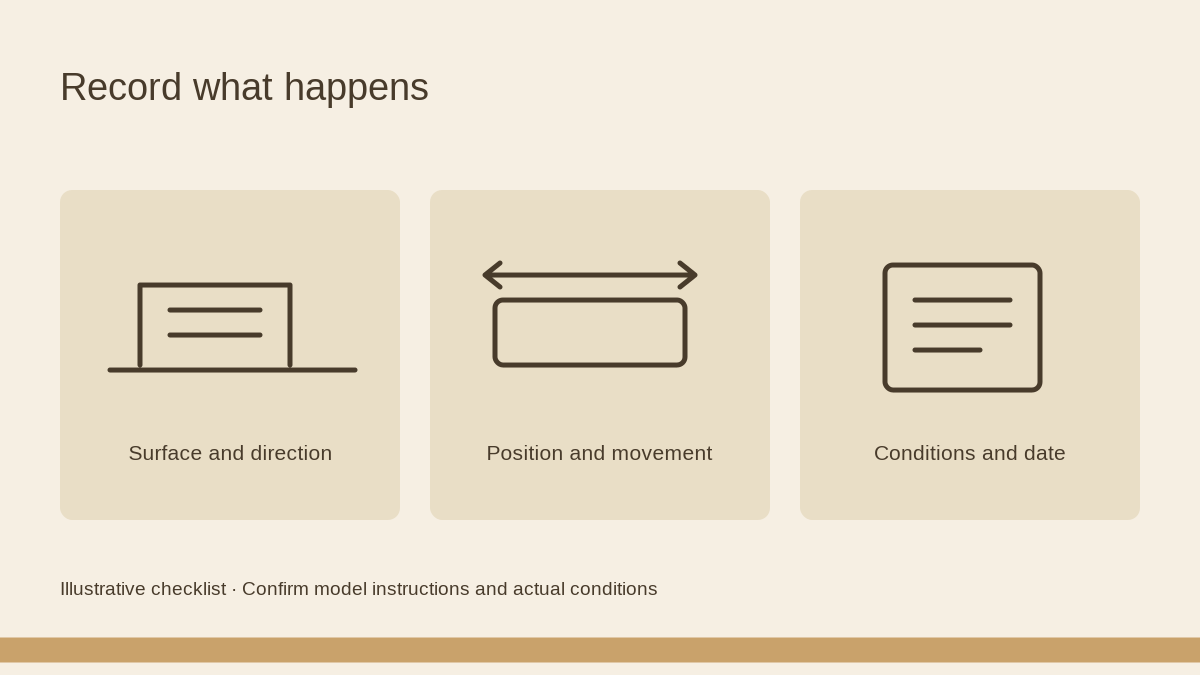
Before comparing products, record where the cat scratches, whether its body is upright or close to the floor, which surface it approaches and whether the object moves during use. Add a short video with the owner’s permission. Keep observation separate from interpretation: “scratched the rug after resting” is more useful than “likes all flat boards”.
Turn observations into product questions
Use the record to ask about usable scratching area, orientation, support and where the product can be placed. Compare actual measurements rather than labels such as large or universal. An observation from one household is a starting point for a trial, not proof of suitability for a whole breed or age group.
For retailers and sourcing teams
A useful product brief contains the intended setting, the observed use and the information still missing. Ask the supplier for measured dimensions and care instructions. Keep clinical explanations out of product claims; a sudden change in behaviour or signs of discomfort should be discussed with a veterinary professional.
Use a repeatable observation sheet
Give each observation a date and a short identifier. Record the surface already being used before introducing a sample, then describe the new setup using the same terms. Keep the board’s overall dimensions separate from the exposed scratching area: a holder or raised edge can reduce usable space. When sharing a record with a supplier, include a ruler in the setup photograph and identify the model. Leave unknown fields blank rather than turning a guess into a specification.
A checklist to save and compare
Record | What to write | What it cannot prove |
|---|---|---|
Posture | Horizontal, inclined or upright during the observed use | A permanent preference or breed-wide rule |
Surface and support | Material, floor type, movement, assembly | A certified durability or stability result |
Use and setting | Time, location, approach and scratching observed | Guaranteed acceptance in other homes |
Compare current model specifications
FAQ
Does scratching mean the cat is misbehaving?
Scratching is normal feline behaviour. Provide suitable opportunities and observe the setting rather than using a product claim to explain every incident.
Can one trial identify the best material?
A trial provides feedback about that cat in that setup. It does not isolate material from location, orientation or stability; record those conditions before comparing samples.
Which product dimensions should I request?
Request overall footprint, usable scratching length and width, and support or installation requirements. The published model size is a starting point; ask for a drawing when usable area is critical.